
10 Top Wellness Trends Worth Trying in 2026 (Updated)
Quick Summary Wellness trends move fast. One month it is protein coffee, the next it is cold plunges, red light masks, or CBD gummies lined
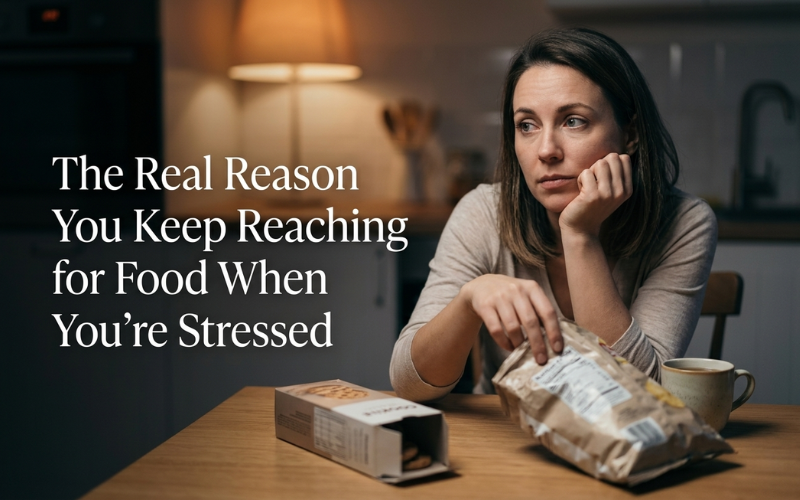
Most people have experienced it. The day gets hard, pressure builds, and suddenly you are standing in front of the pantry, reaching for something salty, sweet, or both. That pattern has a name: stress eating, and it is one of the most common reasons people find it difficult to maintain healthy food habits.
Stress eating is not simply about hunger. It is about using food as a way to manage emotional discomfort. In the moment, it can feel like relief. But over time, the cycle of stress, eating, and regret tends to leave people feeling worse, not better.
Understanding what drives stress eating is the first step toward changing it. And recent research suggests that the solution may have less to do with willpower than most people assume.
The connection between stress and food choices is not a personal weakness. It is rooted in how the brain responds to pressure.
When you are under stress, tired, or emotionally depleted, your brain shifts toward behaviors that deliver quick rewards. Foods high in sugar, fat, or salt tend to activate the brain’s reward pathways faster than nutrient-dense alternatives. That makes them feel more appealing precisely when you are least equipped to resist them.
At the same time, stress reduces your capacity for deliberate decision-making. The part of your brain responsible for weighing long-term consequences becomes less dominant, while the part focused on immediate relief becomes more active. This is why your goals around healthy eating feel clear in the morning but slip away by mid-afternoon when the workday has worn you down.
Relying on willpower to override this response is not a reliable strategy. In-the-moment self-control is a finite resource, and stress depletes it quickly. What works better, according to emerging research, is removing the decision entirely before the stressful moment arrives.
Researchers studying food choices and stress have identified a behavioral approach that consistently helps: making decisions in advance to limit what options will be available later. In psychology, this is called precommitment.
Precommitment works on a straightforward principle. When you are calm and clear-headed, you set rules or remove tempting options from your environment. By the time stress hits and your decision-making weakens, the harder choice has already been made for you.
The same logic applies outside of food. Moving money to savings before you can spend it is a form of precommitment. Blocking social media before sitting down to work is another. In each case, the goal is to protect your future behavior from your in-the-moment impulses by acting when you are at your best.
Applied to stress eating, precommitment might look like not buying chips at the store so they are not available on a difficult evening. Or choosing Monday’s lunch on Sunday night, before the work week begins. The decision is made in a calm window so it holds when the pressure rises.
A study was set out to test whether this kind of planning could genuinely protect against stress eating.
Study snapshot:
What the results showed:
The takeaway is practically significant. Stress eating is not inevitable. The timing of your decisions matters as much as the decisions themselves, and committing to choices before pressure arrives is more effective than trying to resist temptation once it is already there.
It is worth noting that the study was small and conducted on a specific group of psychology students, so the findings should be interpreted with some caution. Still, they offer a clear and useful direction for anyone looking to manage stress eating more consistently.
The lab version of this approach involved participants choosing to remove items from a food list. In daily life, the same principle translates into habits that are easier to build than most people expect.
Plan meals before the week begins. Setting aside time on a Sunday to choose your meals for the week removes the daily friction of deciding what to eat. When Wednesday is stressful, and you are tired by evening, the decision is already behind you.
Pre-portion your snacks. Dividing snacks into single servings when you are relaxed and not hungry makes it far less likely that you will overeat them during a stressful afternoon. The boundary is already set.
Make your grocery list a commitment. Deciding before you enter the store what you will and will not buy removes the in-store temptation from the equation. A stressed brain in a brightly lit supermarket is not the ideal decision-making environment.
Prepare lunch before the workday takes over. Choosing or packing your lunch in the morning, before emails and meetings have depleted your mental energy, is a small act of precommitment that changes what you reach for midday.
Each of these habits follows the same pattern: the decision is made during a low-stress window so that it holds during the high-stress ones. That is what makes this approach fundamentally different from simply trying harder to eat well at the moment.
Starting with this strategy does not require overhauling everything at once. One or two intentional shifts in when you make food decisions can produce noticeable results.
Begin by noticing your most vulnerable windows. For many people, stress eating tends to cluster around specific times: late afternoon, the commute home, evenings after a long day. Once you know your patterns, you can build precommitment around those moments specifically.
If 4pm is your weak point, prepare a portioned snack before you open your laptop in the morning. If evenings tend to unravel your eating intentions, plan dinner the night before and keep the ingredients visible and ready.
Reducing the background stress that fuels these moments also helps. People who sleep consistently, move their body regularly, and have some form of daily wind-down tend to have more capacity to follow through on food intentions even when things get hard. Calm by Wellness offers products designed to support daily stress management, which can complement the planning habits you are building by helping you stay in a calmer baseline state more of the time.
The research found that people with lower dietary restraint, those who find it hardest to stick to their eating intentions in the moment, benefited most from planning food choices.
If stress eating is a recurring pattern for you, particularly during demanding periods at work, in relationships, or during times of uncertainty, this approach offers something that willpower-based strategies do not: it works before the difficult moment arrives, not during it.
That said, the study also showed meaningful benefits for people who generally try to eat well. Even participants with stronger self-regulation around food made better choices under stress when they had committed to those choices in advance. This suggests precommitment is useful across a broad range of people, not only those who feel out of control around food.
The key is consistency. Precommitment is most effective when it becomes a regular habit, not a one-time fix. The more often you make food decisions during calm, intentional moments, the less influence stress eating has over your daily choices.
Stress eating is a real and well-documented pattern, but it is not something you simply have to live with. The research points clearly toward a more reliable path: making food decisions before the stress hits, rather than trying to manage cravings in the middle of a difficult moment.
Planning is not about being perfect. It is about setting yourself up so that your future self, the tired, pressured, depleted version of you at 6 pm on a Thursday, already has a good answer waiting. Start with one habit. Identify one vulnerable window. Make one decision in advance. That is how the pattern begins to shift.
It is the tendency to eat in response to pressure or low mood rather than physical hunger. Stress shifts the brain toward quick rewards and away from deliberate thinking, making high-sugar or high-fat foods more appealing in difficult moments.
Plan your food choices during a calm moment before pressure arrives. Weekly meal planning, pre-portioned snacks, and a firm grocery list all work on the same principle: the decision is already made before temptation shows up.
A study found that committing to food choices beforehand effectively cancelled out the pull toward less nutritious options, even when participants were under acute stress.
People who struggle most with in-the-moment food decisions tend to see the strongest results. That said, the research showed benefits across the board, including for those who generally try to eat well.
Occasional comfort eating is common and not a clinical concern. If the pattern feels frequent, out of control, or is affecting your health, a registered dietitian or mental health professional can offer more tailored support.
Quick Summary Wellness trends move fast. One month it is protein coffee, the next it is cold plunges, red light masks, or CBD gummies lined
Quick Summary The wellness status symbol has quietly changed shape. It used to be a packed schedule, a 5 a.m. workout, or a perfectly optimized
Quick Summary CBD has become one of the most talked about wellness ingredients on the market, and with that popularity comes a lot of confusion.
Quick summary: When people shop for a CBD tincture, they almost always look at one number first. Milligrams of CBD per bottle. That number tells
Quick Summary If you shop for CBD or hemp products, you have probably seen headlines about a federal hemp ban and wondered how it affects