
How to Choose the Best CBD Product for Your Lifestyle?
Quick Summary It’s Not About the Strongest Product; It’s About the Right Fit The CBD market has grown rapidly over the past several years, giving
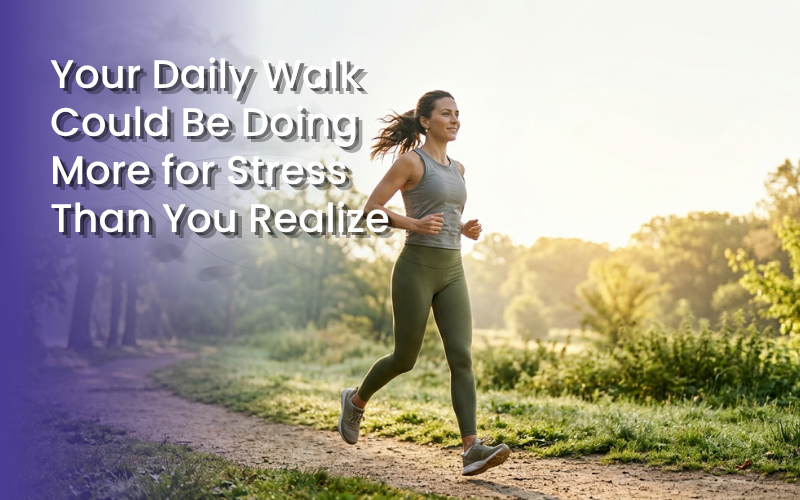
Understanding how exercise reduces stress starts with recognizing what stress actually does to the body. Stress does not stay in your head. It tightens your muscles, disrupts your sleep, and quietly drains the motivation that would otherwise get you off the couch. And yet, the very thing stress steals, the desire to move, is also one of the most effective ways to fight it.
Doctors, psychiatrists, and fitness experts consistently point to the same conclusion about how exercise reduces stress: consistent movement lifts mood, eases anxiety, and protects mental health over time.
When stress runs high, it quietly works against the very habit that would help most. It chips away at motivation, disrupts sleep, and leaves you with less energy to move, which makes it even harder to get started. Breaking that cycle, however, pays off quickly. Regular physical activity helps you feel calmer and mentally clearer. It eases muscle tension, improves sleep quality, and can reduce symptoms of anxiety, depression, and anger.
This is not simply wellness advice. It is backed by measurable changes in brain chemistry, sleep quality, and emotional regulation, and it is recognized across the medical and public health community as one of the most accessible tools available for managing stress.
When you understand what is happening inside your body during movement, the stress-relief effect makes immediate sense.
Physical activity increases the production of beta-endorphins, the brain chemicals responsible for what is commonly called a runner’s high. These neurotransmitters reduce the perception of pain and generate a sense of well-being, which is why even a moderate workout can leave you feeling noticeably lighter within minutes of starting.
That effect is not limited to long-distance runners. Any aerobic activity, including a game of pickleball, a nature hike, or a brisk walk around the block, can produce the same endorphin response. Research has also found that exercise elevates other brain chemicals that ease pain and improve mood, compounding the calming effect.
The Anxiety and Depression Association of America identifies four specific pathways through which movement improves mental health. It prompts endorphin release that counters stress. It reduces physical tension in the body. It improves sleep quality, which is itself a major buffer against stress. And it sharpens focus and energy, two things that chronic stress actively erodes.
If you have been searching for a supplement or habit that quietly addresses several stress symptoms at once, this is the closest thing available without a prescription.
The scientific case for how exercise reduces stress has grown substantially over the past decade, and the findings are consistent across large population studies and smaller controlled research.
A study of 1.2 million U.S. adults between 2011 and 2015 found that regular exercise was associated with significantly fewer poor mental health days, even after controlling for demographic and health-related factors. Researchers compared the number of self-reported poor mental health days between people who exercised regularly and those who did not, controlling for age, race, gender, income, education, body mass index, and prior depression diagnosis.
The results were striking. People who exercised reported substantially fewer poor mental health days. The strongest association was found with moderate activity, specifically about 45 minutes of exercise three to five times per week. Critically, the study also found that more exercise was not always better. Pushing beyond that moderate threshold did not continue to improve outcomes linearly.
“Physical exercise was significantly and meaningfully associated with self-reported mental health burden in the past month,” the study concluded, adding that “specific types, durations, and frequencies of exercise might be more effective clinical targets than others.”
A 2023 study of 90 university students examined a closely tracked group over 10 days. Participants logged their stress levels, daily activity, and mood, with 50 of them also wearing accelerometers. The researchers found that physical activity, even light movement during the day, was linked to lower stress levels by evening. On high-stress days, activity appeared to buffer the emotional toll, reducing the negative impact on how participants felt overall.
Mind-body practices have also drawn serious academic attention. The American Psychiatric Association notes that yoga, tai chi, and mindfulness meditation all carry research-backed benefits for reducing stress and improving mental health. Adoption of these practices is rising: an estimated 33 million Americans practiced yoga in 2023, up from about 21 million in 2010, according to APA data. Nearly 4 million Americans practice tai chi, and roughly 14 percent of adults engage in some form of mindful or spiritual meditation.
One of the most reassuring findings from the research is that you do not need a specific or intense workout to get meaningful stress relief. The evidence points to consistency and moderate effort over volume or intensity.
Walking consistently emerges as one of the most effective and accessible options for stress relief. It delivers a quick release of endorphins that shifts mood almost immediately, and it brings more oxygen to the brain, which helps restore the focus and productivity that stress drains. The mental shift can begin within the first few steps, with feelings of tension and restlessness easing before you have even found your pace.
Beyond walking, mind-body practices like yoga, tai chi, and meditation carry real clinical backing. Research shows they calm the nervous system, improve general well-being, and reduce symptoms associated with anxiety and depression.
For days when even a short walk feels out of reach, a practical alternative is what some researchers call exercise snacks. These are brief bursts of movement woven into the day, a few minutes of stair climbing, a set of jumping jacks, or several pushups between tasks. Even these small breaks have been shown to support attention and concentration, adding a productivity benefit on top of the mood lift.
Many people managing daily stress find it helpful to support their nervous system from multiple directions at once. Movement, sleep, and recovery all work together, and some people add tools like CBD oil tinctures and gummies as part of that broader routine. No single habit carries the full load, but consistent movement remains the most accessible and well-researched starting point.
Understanding how exercise reduces stress is one thing. Actually starting when you are exhausted, overwhelmed, and under pressure is another challenge entirely.
One of the most effective ways to stay consistent is to reframe the entire purpose of the workout. Instead of tying movement to appearance or performance, connect it to how you want to feel. A walk becomes a tool for reducing tension. A strength session becomes a way to feel capable and energized. A recovery day becomes a reason to feel proud. When the goal is a feeling rather than a metric, it stays relevant on the hardest days, when appearance-based or performance-based motivation tends to collapse first.
Lowering the barrier to entry matters just as much. Walking works partly because it is easy to commit to and even easier to follow through on. Every time you say you will go for a walk and then actually do it, you reinforce a small but meaningful layer of self-trust. That trust makes the next session easier to start.
The research also supports keeping intensity moderate rather than pushing to extremes. Studies show the biggest mental health benefit comes from around 45 minutes of activity three to five times per week, and that even light movement on stressful days helps reduce the emotional burden. You do not need to earn the benefits through suffering.
Quick Summary It’s Not About the Strongest Product; It’s About the Right Fit The CBD market has grown rapidly over the past several years, giving
Short answer: CBD can calm anxious feelings for some people, particularly at low-to-moderate doses, but it can also increase anxiety in others, especially if the
Quick Summary What Is Non-Sleep Deep Rest? Non-sleep deep rest, or NSDR, is a term coined by neuroscientist Andrew Huberman. It describes guided relaxation practices
Key Takeaways You have probably seen creatine in gym bags and protein shakes for years, but a growing number of researchers are now studying creatine
Quick Summary Learning how to sleep on a plane can turn a miserable red eye into genuine rest. Tight seats, cabin noise, dry air, and