
7 Everyday Meals That Boost Your CBD Bioavailability
Quick Summary If you take CBD edibles, it helps to know that not every dose is absorbed the same way. The reason comes down to
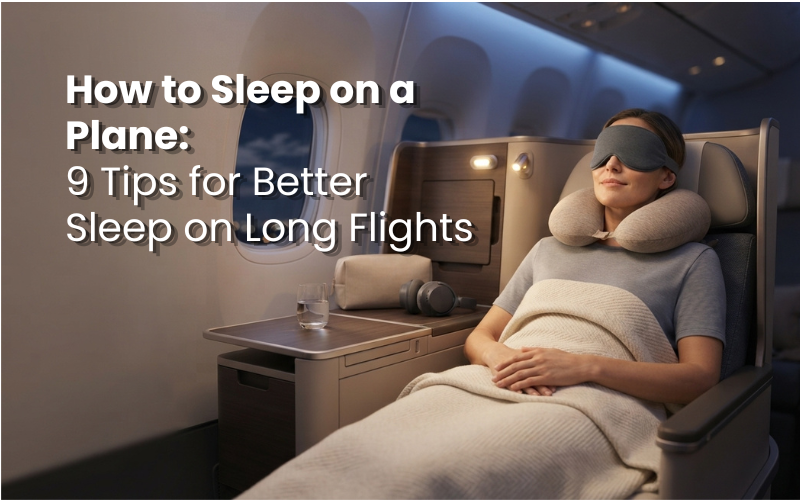
Learning how to sleep on a plane can turn a miserable red eye into genuine rest. Tight seats, cabin noise, dry air, and shifting time zones all work against you, but a few small, intentional changes to how you prepare and settle in can make a real difference.
This guide breaks down practical, doctor-informed strategies for your next flight, from seat selection to what you eat, drink, and pack.
Cabin pressure sits lower than at sea level, which reduces oxygen in your blood and can leave you fatigued yet oddly unable to settle down. Add dry recycled air, engine noise, and a seat that barely reclines, and it is easy to see why travelers arrive exhausted. Peer-reviewed sleep research has found that this reduced oxygen at cruising altitude can impair sleep quality, and the body also relies on light exposure to regulate its internal clock, which cabin lighting rarely matches.
None of this means good rest is impossible. It just means you need a plan.
Where you sit matters more than most people realize. A window seat gives you a wall to lean against and control over the shade, which helps block light when you are ready to rest. It also means you will not be disturbed every time a row mate needs the aisle.
Try to avoid seats near the galley, bathrooms, or exit rows, since foot traffic and lighting tend to stay brighter in those areas.
If you are crossing several time zones, your body needs time to catch up. In the days before departure, try shifting your bedtime earlier or later, in small increments, to match your destination’s schedule. Even one extra hour of adjustment each night can make a difference once you land.
It also helps to avoid starting your trip already sleep-deprived. Banking a little extra rest beforehand gives your body more reserve to handle the stress of travel.
Cabin lighting, seatback screens, and a chatty row mate can all keep you from drifting off. A well-fitted eye mask blocks ambient light, while noise-cancelling headphones or simple earplugs cut down on engine hum and conversation. Together, these two items are some of the most effective tools for resting well in the air.
Soft white noise or a calming playlist can also signal to your brain that it is time to wind down, even in an unfamiliar setting.
What you consume before and during your flight affects how well you rest. Alcohol may feel drowsy-inducing at first, but research on alcohol and sleep quality shows it fragments your sleep cycle later on and worsens dehydration at altitude. Caffeine similarly works against you, keeping your nervous system alert long after you want to relax.
Stick to lighter foods like fruit, vegetables, and lean proteins rather than salty or fried options, which can leave you bloated in a pressurized cabin. Plenty of water throughout the flight also offsets dry cabin air and keeps grogginess at bay.
Cabin temperatures swing throughout a flight, so dressing in layers lets you adjust as needed. Loose, breathable clothing paired with a scarf or light jacket gives you flexibility without overheating.
A supportive travel pillow and compression socks can also make a real difference on longer flights, easing physical tension that might otherwise keep you tossing in your seat.
Anxiety and travel stress are common reasons people struggle to rest on a plane, even when the cabin itself is quiet. Simple techniques like slow breathing or progressive muscle relaxation, where you tense and release each muscle group from your toes upward, can lower stress and ease your body into a restful state.
A short, repeatable routine before takeoff, the same playlist, breathing pattern, and mask, can train your brain to associate those cues with sleep.
Some travelers include CBD in their pre-flight wind-down routine, alongside other calming habits like breathing exercises or a comfortable eye mask. CBD does not sedate you the way a sleep medication would, but many people use it to ease the tension and restlessness that come with travel stress. Brands such as Calm by Wellness offer CBD formulas made for everyday relaxation, which some flyers fold into their broader comfort routine alongside hydration and a good pillow.
As with any supplement, talk to your doctor before trying CBD for the first time, especially if you take other medications or have a tight connection where alertness matters. Current research on CBD and anxiety is still developing, so it is worth treating it as one part of a broader calming routine rather than a guaranteed fix.
🛒Shop CBD for stress and relaxation
Melatonin is a common option for travelers trying to reset their internal clock, and low doses taken a couple of hours before your intended bedtime may help shift your circadian rhythm. That said, Sleep Foundation guidance on jet lag notes that melatonin works best when paired with properly timed light exposure, and daytime light after landing tends to do more for resetting your body clock on its own.
Some over-the-counter sleep aids linger in your system and can leave you groggy after landing. If you do want a pre-measured option, Sleep Well Gummies combine melatonin with a few calming botanicals, which takes some of the guesswork out of dosing on travel days. Even so, a quick conversation with your doctor is the safest first step before trying any new sleep aid.
One of the simplest ways to rest well in the air is to plan around when you will land, not when you would normally sleep at home. If you are landing midday at your destination, try to sleep as much as you can in the air. If you are landing at night, staying awake in flight and sleeping once you arrive can help you adjust faster.
For short trips of a day or two, some travelers find it easier to stay on their home schedule entirely, since the body may not fully adjust either way.
Getting real rest in the air takes more effort than closing your eyes and hoping for the best, but it is far from impossible. Small, deliberate choices, from where you sit to what you eat, how you dress, and the calming routine you build before takeoff, add up to a noticeably better flight. Start with one or two changes on your next trip, and build from there until you find the combination that helps you sleep on a plane every time you fly.
Blocking out light and noise tends to make the biggest immediate difference. An eye mask paired with noise-cancelling headphones or earplugs helps your body settle in faster, even in a bright, noisy cabin.
CBD is not a sedative, but many travelers use it as part of a broader calming routine to ease pre-flight tension and restlessness. Results vary by person, so it is best used alongside other habits like hydration, comfortable clothing, and a consistent wind-down routine.
It depends on your landing time. If you are arriving during daytime hours at your destination, try to sleep on the plane. If you are landing at night, staying awake in flight and sleeping after you land usually helps you adjust faster.
Alcohol, caffeine, and heavy or salty meals in the hours before your flight can all interfere with rest. These make it harder to fall asleep and can worsen dehydration and bloating at altitude.
Quick Summary If you take CBD edibles, it helps to know that not every dose is absorbed the same way. The reason comes down to
Quick Summary Interest in CBD for seniors has grown as more older adults look for gentler options for everyday concerns. Experts say that cannabis can
Quick Summary You open a drawer and find a bag of gummies with a date that passed months ago. If those gummies contain CBD or
Quick Summary New federal hemp rules are scheduled to take effect on December 11, 2026. Under those rules, hemp products that contain measurable amounts of
Quick Summary Imagine you recommend your favorite CBD product to a friend, and their experience turns out to be nothing like yours. Maybe 10 mg