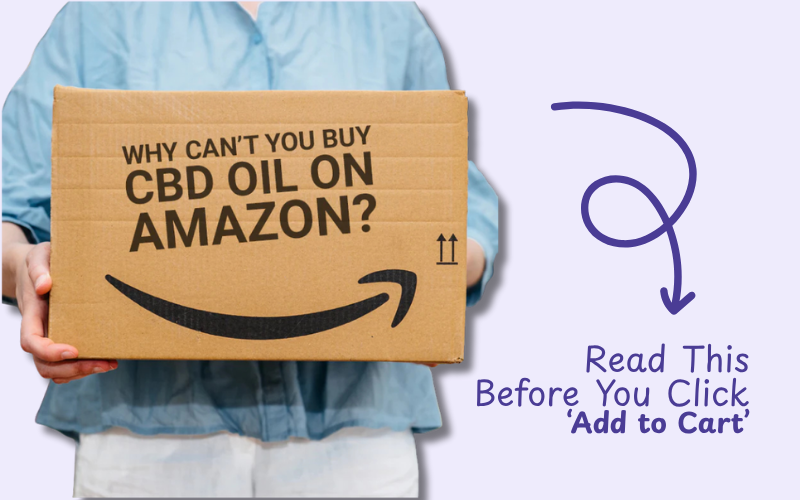
Can You Buy CBD on Amazon in 2025? Why Real CBD Isn’t Available There
Author: Ivan Kan
Buying CBD on Amazon may sound convenient, but in 2025, the world’s largest online retailer still prohibits the sale of true CBD products. Instead, you’re likely to come across hemp seed oils disguised as “CBD alternatives” with no actual cannabinoid content. In this guide, we’ll explain:
Why Amazon bans real CBD
How to spot misleading product listings
The difference between hemp seed oil and CBD
Where to find legitimate, lab-tested CBD from transparent companies
Why CBD Is Still Banned on Amazon in 2025
Amazon’s Policy on Cannabidiol
Amazon has a clear stance: CBD products are not allowed. This includes oils, capsules, topicals, edibles, and even beauty products containing cannabidiol. Sellers trying to list CBD-infused products often disguise them using terms like “hemp extract” or “hemp oil,” but as soon as Amazon detects actual CBD content, the product is removed.
This is supported by Amazon’s policy documents and third-party investigations, which have revealed how unverified products were skirting the rules.
FDA Regulations and Safety Concerns
Although hemp-derived CBD was legalized at the federal level through the 2018 Farm Bill, the FDA still does not approve CBD for use in dietary supplements, food, or beverages. The FDA has warned that more research is needed to assess long-term safety, particularly concerning liver toxicity, drug interactions, and reproductive health.
In 2023, the agency reinforced its stance, stating that CBD does not meet the safety standard for dietary supplement regulation and calling on Congress to create a new legal framework.
Because of this regulatory uncertainty, Amazon avoids selling any product that might attract FDA scrutiny.
What You’re Really Buying When You Search for CBD on Amazon
Hemp Seed Oil ≠ CBD Oil
When you search “CBD oil” on Amazon, what you typically find are hemp seed oils. These come from the seeds of the hemp plant, which contain zero cannabinoids—no CBD, THC, or other active compounds.
Hemp seed oil can be nutritious, containing omega-3 and omega-6 fatty acids, but it does not provide the therapeutic effects commonly associated with CBD. Many consumers are misled by product labels that intentionally blur the line between hemp oil and CBD.
Misleading Labels and Dosages
It’s common to see products with massive numbers like “20,000 mg hemp extract,” giving the impression of potency. However, these numbers often refer to the total quantity of oil, not the amount of active CBD (because there’s none). The products rarely, if ever, disclose cannabinoid content or include third-party lab results.
This labeling strategy is misleading by design, meant to bypass Amazon’s restrictions while catching the attention of CBD-seeking customers.
Lack of Transparency and Testing
Unlike reputable CBD companies, sellers on Amazon don’t offer third-party lab reports. There’s no way to confirm what’s inside the bottle—whether it’s free from contaminants, whether it contains what the label claims, or whether it’s been tested for THC.
Without this transparency, buying CBD on Amazon becomes a risky guessing game.
Legal and Health Risks of Buying CBD on Amazon
Unregulated Ingredients and Quality Concerns
Buying from unknown Amazon sellers leaves you vulnerable to:
Poorly extracted oils using toxic solvents
Unlabeled THC content, which could cause psychoactive effects
Contaminants such as heavy metals, pesticides, or mold
Because Amazon bans COAs (Certificates of Analysis) and third-party testing links, there’s no way to confirm safety or potency. A 2020 study published found that many unregulated CBD products did not contain the labeled amounts of CBD, and some even included illegal amounts of THC.
Legal Ambiguities by State
Even though CBD is federally legal under certain conditions, some U.S. states have stricter rules. For instance, in 2025, states like Idaho and South Dakota still have tight restrictions on CBD. Because Amazon operates nationwide, it avoids selling CBD altogether to minimize legal complications.
How to Spot Real CBD Products vs Fake Amazon Listings
Criteria
Verified CBD Brand
Amazon Hemp Oil Product
CBD Content on Label
Clearly listed (e.g., 25 mg CBD)
Not disclosed
Third-Party Lab Reports
Public and batch-specific
Not provided
Hemp Source
USA-grown, organic, non-GMO
Unknown
Cannabinoid Profile
Includes CBD, may include CBG, CBC
None
Certificate of Analysis
Linked or QR-coded on packaging
Missing
FDA Compliance
No medical claims
Often misleading health language
Where to Buy Real CBD: What to Look For
Prioritize Brands with Full Transparency
The safest way to purchase CBD is directly from brands that:
Provide third-party lab testing
Use organically grown, U.S. hemp
Follow cGMP manufacturing standards
Offer clear return and refund policies
Avoid unproven medical claims
These practices align with FDA recommendations for supplement safety.
Spotlight: Calm by Wellness – A Trusted CBD Brand
One highly-rated example is Calm by Wellness, a U.S.-based CBD company backed by health experts and scientists. It has been recommended by independent review sites and listed in Healthline’s top CBD brands.
Why Calm by Wellness Stands Out
Broad-spectrum CBD: Contains other beneficial cannabinoids but 0.0% THC.
Grown in the USA: Hemp sourced from Colorado, Oregon, and Minnesota.
Manufactured in cGMP-certified facilities
Batch-specific COAs: Available on the website for every product
Highly rated: Thousands of customer reviews and third-party endorsements
Calm by Wellness sells tinctures, gummies, topicals, and sleep aids, all tested for purity and potency.
In short: no. Amazon still does not allow real CBD products in 2025. While hemp seed oils may be nutritious, they donot contain cannabinoids like CBD. Sellers on the platform use misleading labels and cannot share lab testing or guarantee quality.For safe, effective, and verified CBD, purchase from reputable brands like Calm by Wellness, which are fully transparent, utilize third-party testing, and adhere to the latest regulatory guidelines.
Quick Summary The Link between Multivitamins and Biological Aging A growing body of research is exploring the connection between multivitamins and biological aging. Scientists want
Quick Summary Air pollution is increasingly being studied for its potential effects on the brain. For many years, scientists focused mainly on how polluted air
Quick Summary Depression is not just about sadness. It can affect your entire body. Many people experience real, measurable physical symptoms of depression, even if