
Can CBD Calm Anxiety or Make It Worse?
Short answer: CBD can calm anxious feelings for some people, particularly at low-to-moderate doses, but it can also increase anxiety in others, especially if the
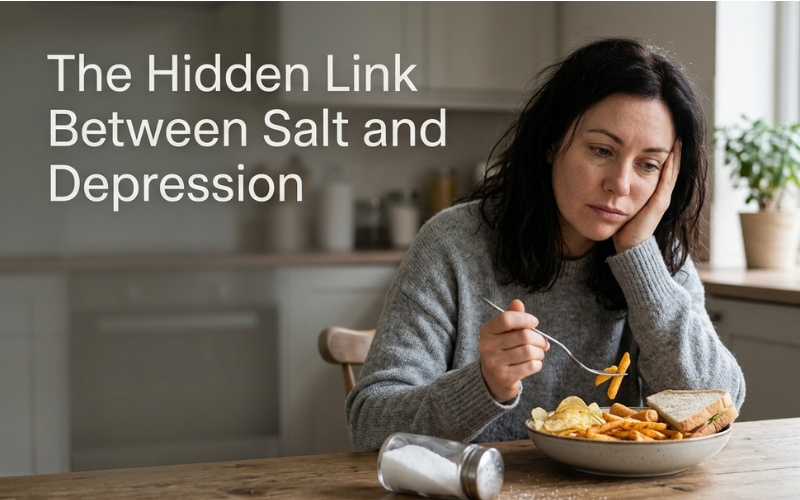
More people are asking, can too much salt make you depressed?
For years, salt has been framed as a heart issue. Doctors warned about blood pressure and stroke risk. Mental health was rarely part of that discussion.
Now, researchers are looking closer.
The field of nutritional psychiatry continues to grow. Scientists are studying how diet influences emotional health. The brain depends on balanced inflammation levels, stable hormones, and healthy gut bacteria. Sodium may affect all three.
A large population study followed adults over time and examined how often they added salt to their meals.
The pattern was clear.
Adults who frequently added extra salt had a 25% higher risk of developing depression compared to those who rarely did.
This does not mean salt directly causes depression. Mental health is complex. Genetics, trauma exposure, stress levels, sleep, and lifestyle all matter.
However, consistent associations between high sodium intake and depression risk are difficult to ignore.
When researchers see a repeated pattern in large data sets, it signals that further investigation is warranted.
The question many readers are asking is simple: Can too much salt make you depressed?
While research is still developing, several biological explanations make the connection plausible.
High-sodium diets may increase systemic inflammation. Chronic inflammation has been linked to depressive symptoms in multiple clinical studies.
Research shows that inflammatory markers can interfere with neurotransmitters such as serotonin and dopamine. These chemicals regulate mood stability and emotional resilience.
When inflammation remains elevated over time, emotional regulation may be affected.
If you are exploring related topics, you may also want to review content on inflammation and depression, since the two are closely connected.
Excess sodium may influence cortisol activity. Cortisol is the body’s primary stress hormone. When cortisol remains elevated for long periods, it can contribute to anxiety, sleep disturbance, and depressive symptoms.
Hormonal balance plays a critical role in mental health. Even moderate disruption may compound existing stress.
A study has highlighted the importance of the gut microbiome in regulating mood.
High salt intake may reduce beneficial gut bacteria. Since much of the body’s serotonin production occurs in the gut, changes in microbiome balance may influence mood signaling.
This growing research area, often discussed under gut-brain axis mental health, continues to expand.
Taken together, these mechanisms help explain why the question, Can Too Much Salt Make You Depressed?, is gaining serious scientific attention.
Most people assume their salt intake comes from what they sprinkle at the table.
In reality, processed foods are the main source.
The World Health Organization reports that packaged and ultra-processed foods account for the majority of sodium intake in many countries.
Common contributors include:
Someone can easily exceed recommended sodium limits without consciously adding salt.
If you are looking deeper into processed foods and mental health, sodium is only one piece of a larger dietary pattern.
Even without the mental health discussion, excess sodium carries clear physical risks.
The Centers for Disease Control and Prevention identifies high sodium intake as a major contributor to hypertension. High blood pressure significantly increases the risk of heart disease and stroke.
Kidney strain is another concern. The kidneys regulate sodium balance. Chronic overload may impair long-term kidney function.
Fluid retention, bloating, and headaches are common short-term effects.
The potential link between sodium and depression adds another layer to these well-documented risks.
Health authorities provide specific guidelines.
The World Health Organization recommends limiting sodium intake to 2,000 mg per day. The American Heart Association suggests an ideal target of 1,500 mg per day for optimal heart health.
Many adults consume more than 3,400 mg daily.
Restaurant meals alone can exceed the full daily recommendation in a single serving.
Over time, consistent excess may affect both cardiovascular and possibly emotional health.
High sodium intake does not always produce dramatic symptoms.
However, common signs may include:
Reading nutrition labels can provide clarity. Sodium content varies widely across brands.
Small awareness shifts can reveal patterns you may not have noticed.
Reducing sodium does not require drastic restriction.
Cooking at home allows you to control seasoning levels. Herbs, citrus, garlic, and spices can replace much of the salt used for flavor.
Choosing fresh proteins instead of processed meats reduces sodium immediately.
Rinsing canned vegetables and beans lowers sodium content.
Gradual reduction helps taste preferences adjust naturally. Over time, foods with excessive salt may begin to taste overly strong.
These simple steps can support heart health and may also help reduce dietary factors associated with mood disruption.
Diet is one part of mental health, but it is not the only factor.
If you experience persistent sadness, loss of interest in activities, fatigue, sleep disruption, or difficulty concentrating, professional evaluation is important.
The National Institute of Mental Health emphasizes early treatment for depressive disorders.
Nutritional improvements can complement medical care. They should not replace therapy, medication, or structured mental health support when needed.
Current research suggests there may be a meaningful connection. A large study found a 25% higher risk of depression among adults who regularly added extra salt to meals.
While sodium is not the sole cause of depression, high intake may influence inflammation, stress hormones, and gut health in ways that affect mood.
Most excess salt comes from processed foods rather than the salt shaker. Reducing intake is a practical step that supports cardiovascular health and may also benefit emotional well-being.
Mental health is shaped by many factors. Paying attention to sodium intake is one manageable piece within your control.
Short answer: CBD can calm anxious feelings for some people, particularly at low-to-moderate doses, but it can also increase anxiety in others, especially if the
Quick Summary What Is Non-Sleep Deep Rest? Non-sleep deep rest, or NSDR, is a term coined by neuroscientist Andrew Huberman. It describes guided relaxation practices
Key Takeaways You have probably seen creatine in gym bags and protein shakes for years, but a growing number of researchers are now studying creatine
Quick Summary Learning how to sleep on a plane can turn a miserable red eye into genuine rest. Tight seats, cabin noise, dry air, and
Quick Summary What Is Delta 8? Delta 8, short for delta-8 tetrahydrocannabinol, is a cannabinoid that occurs naturally in cannabis plants in very small amounts.