
How to Choose the Best CBD Product for Your Lifestyle?
Quick Summary It’s Not About the Strongest Product; It’s About the Right Fit The CBD market has grown rapidly over the past several years, giving
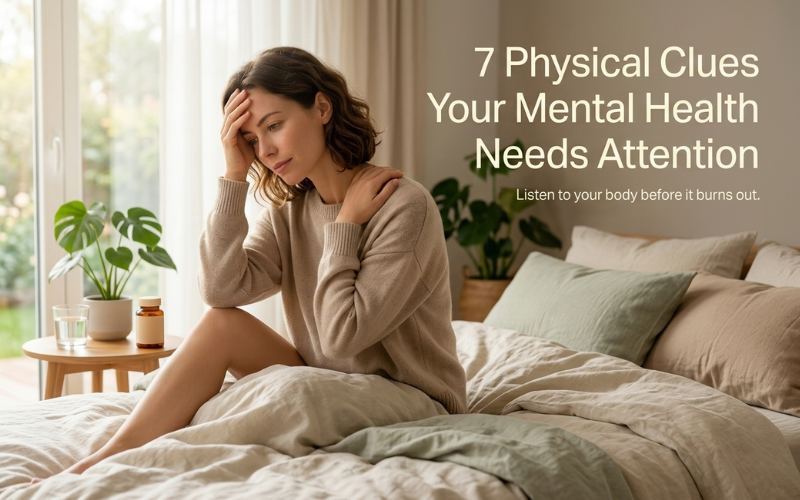
Depression is not just about sadness.
It can affect your entire body.
Many people experience real, measurable physical symptoms of depression, even if they do not feel emotionally low all the time.
If you have unexplained aches, sleep problems, or constant fatigue, your mental health may be playing a role.
Understanding how depression shows up physically can help you seek the right support.
Depression is a medical condition. It affects brain chemistry, hormones, and the nervous system.
When neurotransmitters like serotonin and dopamine become imbalanced, it impacts mood. It also affects pain perception, sleep cycles, and energy regulation.
According to the National Institute of Mental Health, depression can interfere with how the brain processes signals from the body. This is one reason physical discomfort often appears alongside emotional symptoms.
WHO also recognizes depression as a leading cause of disability worldwide. Many of those disabilities involve physical functioning.
Depression is not “all in your head.” It influences nearly every system in your body.
Depression does not just affect how you feel. It can change how your body feels, too.
One of the most common physical symptoms of depression is persistent fatigue.
This is not ordinary tiredness. It can feel heavy and constant. Even simple tasks may feel exhausting.
Published research shows that depression often reduces motivation and energy levels.
You may sleep for long hours and still wake up feeling drained. This type of fatigue can affect work performance, relationships, and daily routines.
Depression often changes the way you sleep.
Some nights you may lie awake for hours, unable to settle your mind. Other times you may sleep far longer than usual and still wake up feeling unrefreshed.
You might fall asleep easily but wake up at 3 a.m. with racing thoughts. Or you may feel exhausted all day yet restless at night.
Sleep problems are both a symptom of depression and something that can increase the risk of it.
When sleep suffers, mood usually follows. And when mood drops, sleep often becomes even harder. It can start to feel like you are stuck in a loop that is difficult to manage on your own.
Some people explore calming nighttime routines to support better rest. Options like CBD for sleep may help promote relaxation before bed.
Back pain. Joint pain. Muscle soreness.
Many people with depression report physical pain with no clear injury.
Depression can lower your pain threshold. It can also increase inflammation in the body. You may visit multiple doctors and receive normal test results. That does not mean the pain is imaginary.
The connection between mood and pain is real and well-documented.
Frequent headaches are another common physical symptom of depression.
Tension headaches may feel like pressure around your forehead or temples. Migraines may include nausea and light sensitivity.
Studies published in journals show a strong link between mood disorders and chronic headache conditions.
Stress hormones released during depressive episodes can contribute to muscle tension and vascular changes.
If headaches increase during periods of emotional distress, depression may be a contributing factor.
Your gut and brain are closely connected.
This link is often called the gut-brain axis.
Depression can interfere with digestion. Some people experience nausea, constipation, or diarrhea. Others notice stomach cramps or bloating.
Mental health conditions can alter how the digestive system functions. Stress and low mood can change appetite and gut motility.
If you have ongoing digestive discomfort with no clear cause, it may be worth discussing your mental health with a provider.
Depression can quietly change your relationship with food.
You might notice that meals no longer appeal to you. Foods you once enjoyed may taste bland or uninteresting. Over time, that loss of appetite can lead to unintentional weight loss.
For others, the opposite happens. You may find yourself reaching for comfort foods more often, especially foods high in sugar or carbohydrates. That shift can lead to weight gain without you fully realizing it.
Medical experts recognize appetite and weight changes as common signs of major depressive disorder.
These changes are not about discipline or self-control. Depression can alter brain chemistry and the way your reward system responds to food.
If your eating habits shift in a way that feels out of character, it may be worth looking at your emotional health as part of the picture.
Depression does not always mean staying in bed all day.
For some people, it shows up in subtle physical ways. You might notice that you are moving more slowly than usual. Getting dressed can feel like it takes extra effort. Conversations may feel harder to keep up with. Your responses may come out slower than you expect.
Clinicians call this psychomotor slowing. It reflects how depression can affect both the brain and the body.
Other people experience the opposite. You may feel keyed up or restless. Sitting still might feel uncomfortable. You might pace, tap your foot, or feel a constant sense of inner tension.
Experts recognize both slowed movement and restlessness as symptoms of major depression.
When your pace or physical energy shifts in ways that do not feel like you, it can be a sign that depression is influencing your nervous system, not just your mood.
Physical symptoms of depression can look a lot like other health issues.
Ongoing fatigue might make you wonder about anemia. Digestive discomfort could seem related to food sensitivities. Frequent headaches may raise concerns about neurological problems.
That is why it is important to check in with a healthcare provider and rule out underlying medical conditions first. Getting clear answers can bring peace of mind.
If your tests come back normal but the symptoms continue, it may be time to look at your mental health more closely. That next step can feel vulnerable, but it is also practical and proactive.
Early treatment often improves both physical and emotional symptoms. Support might include therapy, medication, lifestyle adjustments, or a combination that fits your needs.
Depression is treatable. Many people begin to feel better with the right care.
You deserve support that takes both your body and your mind seriously.
Depression is not just sadness. It is a whole-body condition.
The physical symptoms of depression can include fatigue, sleep disturbances, pain, headaches, digestive problems, appetite changes, and movement differences.
These symptoms are real. They are medically recognized.
If your body feels off and you cannot find a clear explanation, your mental health may be part of the picture.
Recognizing these signs is not about labeling yourself. It is about understanding how deeply connected your brain and body truly are.
Seeking help can be a powerful first step toward feeling better, physically and emotionally.
Quick Summary It’s Not About the Strongest Product; It’s About the Right Fit The CBD market has grown rapidly over the past several years, giving
Short answer: CBD can calm anxious feelings for some people, particularly at low-to-moderate doses, but it can also increase anxiety in others, especially if the
Quick Summary What Is Non-Sleep Deep Rest? Non-sleep deep rest, or NSDR, is a term coined by neuroscientist Andrew Huberman. It describes guided relaxation practices
Key Takeaways You have probably seen creatine in gym bags and protein shakes for years, but a growing number of researchers are now studying creatine
Quick Summary Learning how to sleep on a plane can turn a miserable red eye into genuine rest. Tight seats, cabin noise, dry air, and