
How to Choose the Best CBD Product for Your Lifestyle?
Quick Summary It’s Not About the Strongest Product; It’s About the Right Fit The CBD market has grown rapidly over the past several years, giving
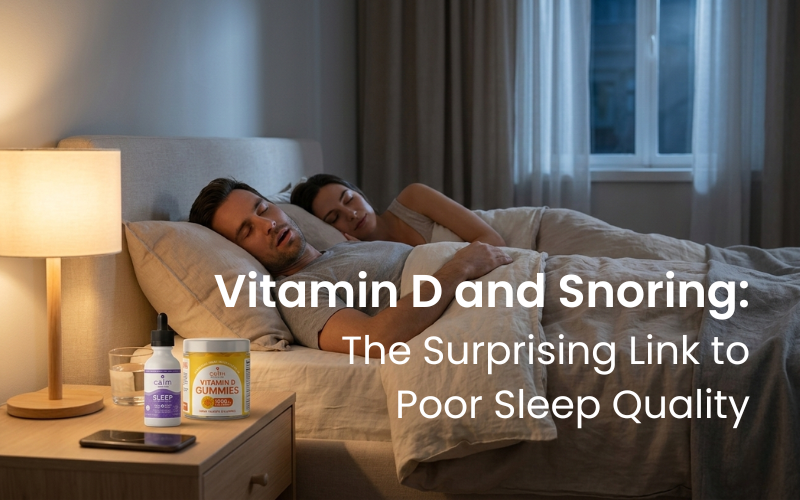
Vitamin D and snoring may be more connected than most people realize. Snoring is often blamed on sleep position, congestion, or weight. But emerging research suggests nutrient status can also influence nighttime breathing.
Vitamin D plays a role in muscle strength, immune balance, and inflammation control. These systems directly affect airway stability during sleep. When levels are low, the muscles that keep the throat open may relax too much.
That relaxation can narrow airflow and increase tissue vibration. Over time, this may contribute to louder or more frequent snoring.
Understanding this link does not mean vitamin D is a cure. It highlights one biological factor that may influence sleep quality.
Snoring happens when airflow becomes partially blocked during sleep. This obstruction causes soft tissues in the throat to vibrate. The vibration creates the sound most people recognize.
Many factors can contribute. Sleeping position is one. Nasal congestion is another. Body weight and alcohol use can also play a role.
Snoring often occurs when airway muscles relax too much during sleep. This relaxation narrows breathing passages.
Occasional snoring is common. Frequent snoring may signal deeper breathing disruption.
💡Did you know? According to the American Academy of Sleep Medicine, roughly 40% of adult men and 24% of adult women are habitual snorers.
Vitamin D is commonly associated with bone health. It helps the body absorb calcium. It supports skeletal strength.
Its role goes far beyond bones. Vitamin D supports immune function. It helps regulate inflammation. It contributes to nerve signaling and muscle performance.
These functions influence how the body operates during sleep. Breathing mechanics rely on muscle coordination and airway stability.
Emerging research has explored the link between vitamin D and snoring. Scientists are looking at how deficiency may influence nighttime breathing.
Low vitamin D levels are associated with impaired muscle function. This includes the muscles that keep the upper airway open while you sleep.
When these muscles relax too much, airflow becomes restricted. That restriction increases tissue vibration. The result is snoring.
The relationship is not purely causal. Researchers describe it as a biological pathway that may contribute to breathing disturbances.
Airway stability depends on neuromuscular control. Muscles in the throat must remain firm enough to keep passages open.
Vitamin D supports muscle performance. Deficiency can weaken muscle tone.
When throat muscles lose strength, collapse becomes more likely during deep sleep. This collapse narrows airflow channels. Snoring intensity may increase as a result.
This mechanism is also studied in obstructive sleep apnoea. Poor muscle tone can worsen airway obstruction during rest.
Inflammation adds another layer to the connection between vitamin D and snoring.
Vitamin D has anti-inflammatory properties. Low levels are linked to higher systemic inflammation.
Inflamed airway tissues can swell. Swelling narrows breathing passages. Narrow airways increase airflow resistance.
Research has found that chronic inflammation may make upper airway tissues more prone to obstruction during sleep.
This environment creates conditions where snoring becomes more frequent or louder.
Vitamin D deficiency is widespread. It affects populations even in sunny climates.
Several lifestyle factors contribute:
Urban living has reduced daily sunlight exposure. Many people spend most daylight hours indoors.
Because symptoms are often subtle, the deficiency can go unnoticed for years.
Low vitamin D does not always present obvious symptoms. When signs appear, they can include:
Sleep disturbances may also occur. These disturbances can overlap with snoring or restless sleep.
A blood test is the only reliable way to confirm the deficiency.
Correcting vitamin D deficiency is not a guaranteed cure for snoring. It should not replace medical evaluation for sleep disorders.
However, clinicians recognize potential supportive benefits. Improving vitamin D status may:
These improvements may reduce the severity of snoring in some individuals.
People with obstructive sleep apnoea should still seek specialized care. Vitamin D support works best as part of a broader sleep strategy.
If levels are low, several strategies may help restore balance.
Controlled sunlight exposure helps the body produce vitamin D naturally. Even short daily periods outdoors can make a difference.
Vitamin D-rich foods include:
Diet alone may not correct the deficiency, but can provide supportive intake.
Healthcare providers may recommend supplements when blood levels fall below optimal ranges. Testing guides proper dosage.
Recommended intake levels differ depending on age, sun exposure, and individual health needs.
A high-quality vitamin D supplement can help fill gaps when sun exposure and diet are not enough. Products like Calm by Wellness Vitamin D are formulated to support daily intake consistency. Consistent intake helps maintain stable blood levels, which supports muscle function and immune balance.
The goal is not to overcorrect. It is to restore and maintain healthy ranges. Working with a healthcare provider ensures the dose fits your individual needs.
Snoring that is loud, frequent, or disruptive warrants medical attention.
You should seek evaluation if snoring is paired with:
These symptoms may indicate obstructive sleep apnoea.
A healthcare provider may recommend sleep studies, airway exams, or blood testing for nutrient deficiencies.
Snoring rarely has a single cause. It often reflects overlapping lifestyle and physiological factors.
Weight management plays a role. Alcohol intake can worsen airway relaxation. Nasal congestion can restrict airflow.
Nutrient status is one piece of the puzzle. Vitamin D supports the muscular and inflammatory systems that influence breathing.
Addressing the deficiency may improve overall sleep quality. It can also support immune and musculoskeletal health.
The connection between vitamin D and snoring is gaining scientific attention. Research suggests deficiency may weaken airway muscles and increase inflammation.
These changes can narrow breathing passages during sleep. The result may be louder or more frequent snoring.
Vitamin D is not a standalone cure. Snoring can stem from structural, lifestyle, or medical causes. Still, correcting low levels may support better airway stability and nighttime breathing.
If snoring persists, medical evaluation remains essential. A simple blood test can determine vitamin D status. From there, targeted steps can support both sleep quality and long-term health.
Quick Summary It’s Not About the Strongest Product; It’s About the Right Fit The CBD market has grown rapidly over the past several years, giving
Short answer: CBD can calm anxious feelings for some people, particularly at low-to-moderate doses, but it can also increase anxiety in others, especially if the
Quick Summary What Is Non-Sleep Deep Rest? Non-sleep deep rest, or NSDR, is a term coined by neuroscientist Andrew Huberman. It describes guided relaxation practices
Key Takeaways You have probably seen creatine in gym bags and protein shakes for years, but a growing number of researchers are now studying creatine
Quick Summary Learning how to sleep on a plane can turn a miserable red eye into genuine rest. Tight seats, cabin noise, dry air, and