How to Choose the Best CBD Product for Your Lifestyle?
Quick Summary It’s Not About the Strongest Product; It’s About the Right Fit The CBD market has grown rapidly over the past several years, giving

Fatty liver disease happens when fat builds up inside liver cells. This can develop over time without clear symptoms.
In early stages, it may not cause noticeable issues. Over time, it can lead to inflammation and damage.
Health research links this condition to metabolic health. It is often associated with weight gain, insulin resistance, and poor diet patterns. Research shows that lifestyle changes are the most effective way to manage liver fat.
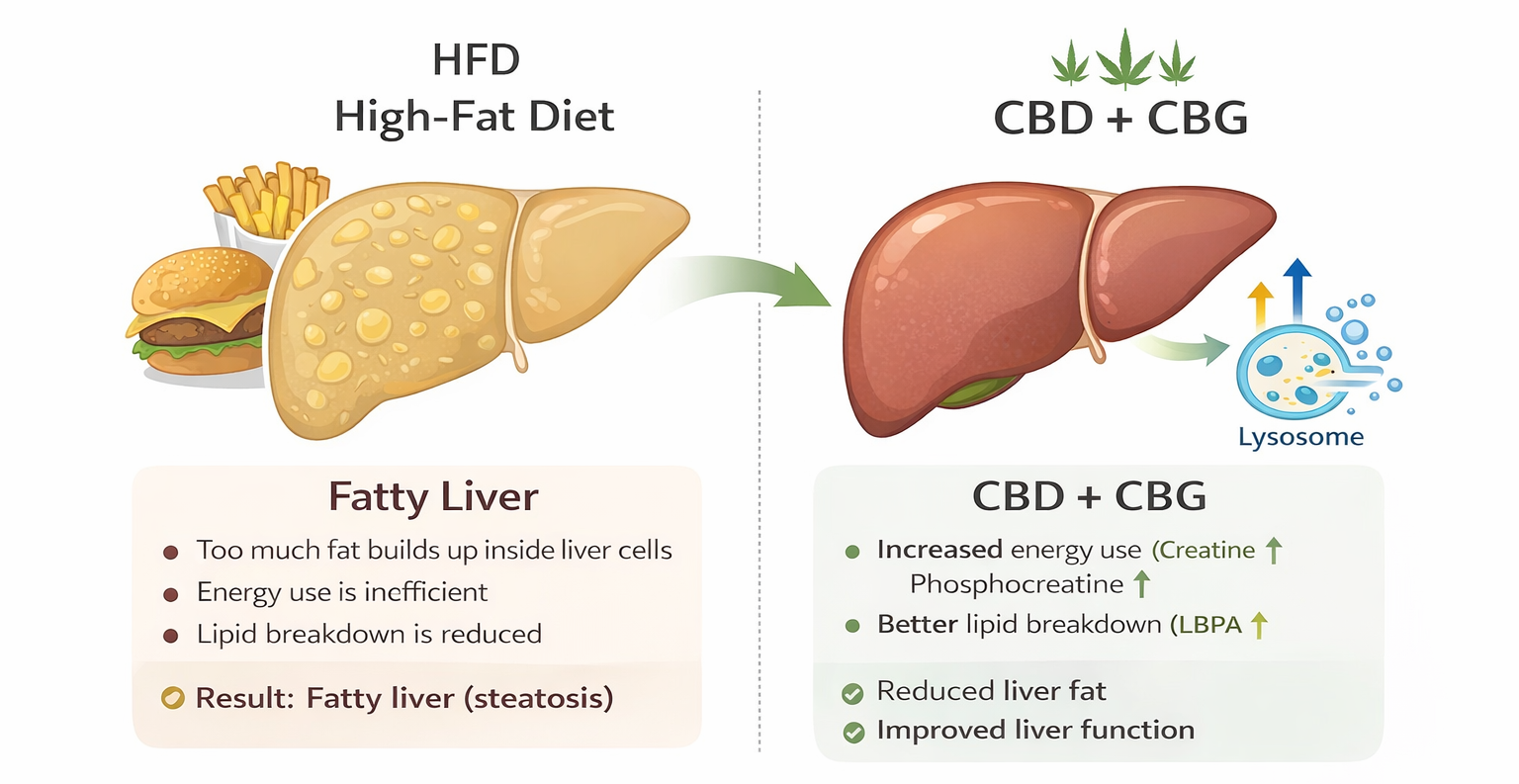
A recent preclinical study found that non-intoxicating cannabis compounds like CBD and CBG reduced liver fat, improved blood sugar control, and lowered lipid levels in obese mice.
It is found that certain cannabinoids may reduce fat accumulation in liver cells. They also observed changes in inflammation markers.
CBD appeared to influence how cells store and process fat. This suggests a possible role in improving liver function. These findings are promising, but they are not based on human trials. The results come from early-stage research.
This means CBD is not a confirmed treatment for fatty liver disease at this time.
CBD interacts with the endocannabinoid system. This system helps regulate metabolism, inflammation, and energy balance.
Researchers believe this interaction may affect how the liver handles fat. It may also play a role in reducing oxidative stress.
Oxidative stress is a known factor in liver damage. Reducing it may support overall liver function.
Some health studies also connect inflammation control with better metabolic outcomes. This is important for conditions linked to liver fat.
The current research on CBD for fatty liver disease is limited. Most studies use lab models rather than human participants.
Controlled environments do not reflect real-life conditions. Diet, lifestyle, and long-term use all affect outcomes.
Health experts continue to recommend proven approaches. These include balanced nutrition and regular physical activity. Research from leading health institutions shows that reducing body weight can significantly lower liver fat.
CBD may become part of future studies, but it is not a replacement for established methods.
Liver health depends on consistent daily habits. Small changes can have a measurable impact over time.
Focus areas include:
These habits help reduce fat buildup and improve metabolic function.
Some people add CBD products to support these routines. It is often used to help manage stress or improve sleep quality. These factors connect back to overall metabolic health.
When choosing CBD, quality matters. Hemp naturally absorbs compounds from the soil through phytoextraction. This includes heavy metals like cadmium and lead. Clean sourcing and third-party testing help reduce this risk.
CBD fits best as a support tool. It works alongside habits that already promote liver health, not as a replacement for them.
Interest in CBD for fatty liver disease is growing as new research develops. Early findings suggest cannabinoids may influence how the liver handles fat and inflammation.
These results are still limited to early-stage studies. They do not confirm CBD as a treatment for fatty liver disease.
For now, the most reliable approach remains consistent daily habits. Nutrition, movement, sleep, and stress management continue to drive real improvements in liver health.
CBD may play a supportive role within that routine. It fits best as one piece of a broader lifestyle, not as a replacement for proven methods.
Research on CBD for fatty liver disease is still early. Studies show potential in lab models, but human trials are needed.
CBD is generally well-tolerated, but individual responses vary. It is important to consider product quality and consult guidance when needed.
Early studies suggest CBD may influence fat metabolism and inflammation. These effects are still being studied.
Lifestyle changes remain the most effective approach. This includes diet, exercise, and weight management.
CBD should not replace proven methods. It may support a routine, but it is not a primary treatment.