How to Choose the Best CBD Product for Your Lifestyle?
Quick Summary It’s Not About the Strongest Product; It’s About the Right Fit The CBD market has grown rapidly over the past several years, giving
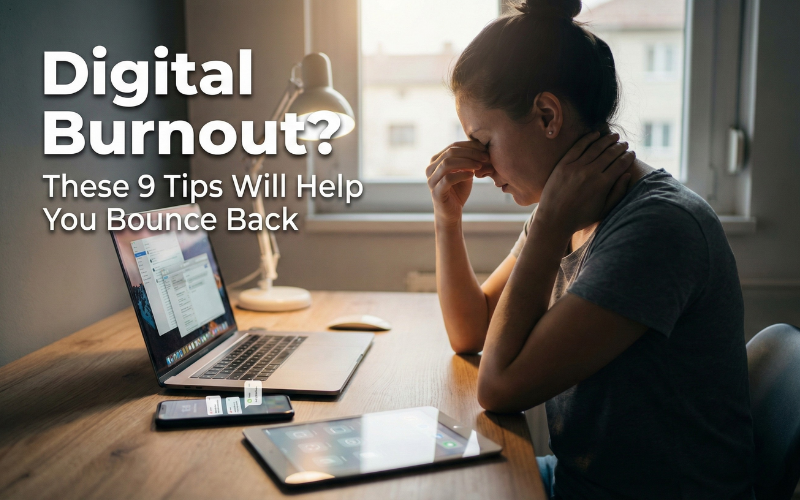
Digital burnout is mental and emotional fatigue caused by too much screen time. It affects attention, mood, and sleep. It feels like brain fog or chronic distraction. You may feel tired, overstimulated, or numb, even after rest.
This type of burnout doesn’t just come from work. It happens when you scroll all day, binge-watch at night, and never really log off.
A 2025 survey found that 62% of U.S. adults feel burned out from being online. The numbers are even higher for younger people. Nearly three in four Gen Z respondents say they feel exhausted from their digital life.
The problem isn’t just screen time. It’s the type of screen time. Most online content is designed to be addictive. Rapid visuals, autoplay videos, notifications, and algorithm-driven feeds keep the brain in a constant state of alert.
This digital overstimulation triggers the release of cortisol, the primary stress hormone. It also disrupts melatonin, which is essential for sleep.
Psychologists say the result looks a lot like chronic stress. Poor sleep. Irritability. Low energy. Shortened attention spans.
Silence non-essential notifications. Every ping disrupts your focus and drains your mental energy. Set your phone to “Do Not Disturb” during focused work or downtime.
Try This: Disable alerts from social media and shopping apps. Check them on your schedule, not theirs.
Doomscrolling, endlessly consuming negative news feeds, causes anxiety. It overwhelms your brain and makes it hard to unplug.
Try This: Limit social media to 30 minutes a day. Apps like One Sec or Freedom can help you stay mindful.
Evidence: Just 30 minutes less social media per day can reduce depression and loneliness.
Morning light resets your circadian rhythm. Evening blue light delays sleep. Use each wisely.
Try This: Get 10 minutes of sunlight before 10 a.m. Use blue light filters like Night Shift or f.lux after sunset.
Avoid screens during the first 30 minutes after waking. Morning screen time increases stress and shortens attention span.
Try This: Start your day with movement, hydration, or journaling instead.
Screens before sleep keep your brain wired. Melatonin stays low. Sleep quality suffers.
Try This: Power down 60 minutes before bed. Try reading, stretching, or using a meditation app with audio only.
Support Tip: If screen-free time isn’t enough to wind down, calming supplements like magnesium or tinctures and gummies may support deeper rest.
Calm by Wellness offers vegan multivitamins and sleep-support CBD gummies and tinctures made with natural ingredients, an option some find helpful as part of their nighttime routine.
Distraction-blocking tools can help reclaim your time and mental clarity. Many are free and easy to set up.
Try This: Apps like Forest, Cold Turkey, or StayFocusd help limit time on distracting sites.
Multitasking isn’t efficient. It increases errors and mental fatigue. Doing one thing at a time is better for the brain.
Try This: Use the Pomodoro Technique: 25 minutes of focus, 5 minutes of rest. Repeat four times, then take a longer break.
Your body and brain need movement to stay alert. Sitting too long slows circulation and drains focus.
Try This: Set a timer to stand or stretch every hour. Even 2 minutes helps.
Decide when you’re online and when you’re not. Let others know. Protect your rest time like a meeting on your calendar.
Try This: No screens during meals or after 8 p.m. Keep your phone in another room during wind-down hours.
Support Tip: Setting screen boundaries gets easier when your body feels grounded. Try pairing tech-free hours with calming habits like tea, breathing exercises, or natural stress support supplements.
Digital burnout is a modern health issue. You don’t need to quit your devices. But you do need to use them with more intention.
Try one or two strategies at a time. The goal isn’t perfection. It’s creating space to feel like yourself again.
Quick Summary It’s Not About the Strongest Product; It’s About the Right Fit The CBD market has grown rapidly over the past several years, giving
Short answer: CBD can calm anxious feelings for some people, particularly at low-to-moderate doses, but it can also increase anxiety in others, especially if the
Quick Summary What Is Non-Sleep Deep Rest? Non-sleep deep rest, or NSDR, is a term coined by neuroscientist Andrew Huberman. It describes guided relaxation practices
Key Takeaways You have probably seen creatine in gym bags and protein shakes for years, but a growing number of researchers are now studying creatine
Quick Summary Learning how to sleep on a plane can turn a miserable red eye into genuine rest. Tight seats, cabin noise, dry air, and