How Too Much or Too Little Sleep Raises Dementia Risk by 28%
Quick Summary What the Study Found Dementia affects millions of people worldwide. There is still no cure. Treatments may slow progression in some cases, but

Anxiety bags are small kits people carry to help them stay grounded when stress hits. Some call them calm-down kits or panic pouches. The idea is simple. Keep helpful items within reach.
These kits often include everyday objects. A scented oil, a piece of sour candy, or a small fidget tool can all play a role. Each item is there for a reason. It helps pull attention away from overwhelming thoughts.
The trend has grown quickly online. It feels practical and easy to try. It does not rely on apps or structured routines.
Stress can build fast. In those moments, even helpful techniques can be hard to remember.
Many people try things like mindfulness or breathing exercises. These can work, but only if you remember to use them. During high stress, the brain can feel overloaded. That makes it harder to pause and think clearly.
Recent survey data shows how common this is. In one group of people ages 18 to 26, 61% reported a diagnosed anxiety condition, while 43% said they experience panic attacks at least once a month.
Another large survey found that nearly half of young people say they often or always feel anxious. This highlights how widespread daily stress has become among younger age groups.
Anxiety bags work by shifting attention back to the body.
Each item creates a physical experience. A strong taste, a calming scent, or a textured object can all help break the cycle of anxious thinking. This shift can slow down the stress response.
Simple actions can make a difference. Holding something cold or tasting something sharp can interrupt rising anxiety. These small moments help people stay present.
Research on grounding techniques suggests that sensory-based approaches can help reduce anxiety by redirecting attention to the present moment and away from racing thoughts.
These tools are not meant to fix anxiety long-term. They help in the moment. They create a pause that can stop stress from getting worse.
Experts support the idea behind anxiety bags. Sensory input can help regulate how the body responds to stress.
Anxiety often comes with physical symptoms. These can include a fast heartbeat, sweating, or dizziness. Sensory tools help redirect focus away from those feelings.
Different triggers need different tools. If noise or crowds feel overwhelming, reducing input can help. Headphones or quiet music may work in those cases.
If thoughts are racing, stronger sensory input can be more effective. Something like mint gum or a textured object can help shift focus.
Experts also point out that repetition matters. The more often a tool is used, the more the brain connects it with calm.
These kits are useful in everyday situations. Stress does not only show up in big moments. It can happen while running errands, working, or being around people.
Having tools ready makes it easier to respond early. A small action can prevent stress from building.
Some people also feel calmer just knowing the items are there. That sense of preparation can reduce worry before anything even happens.
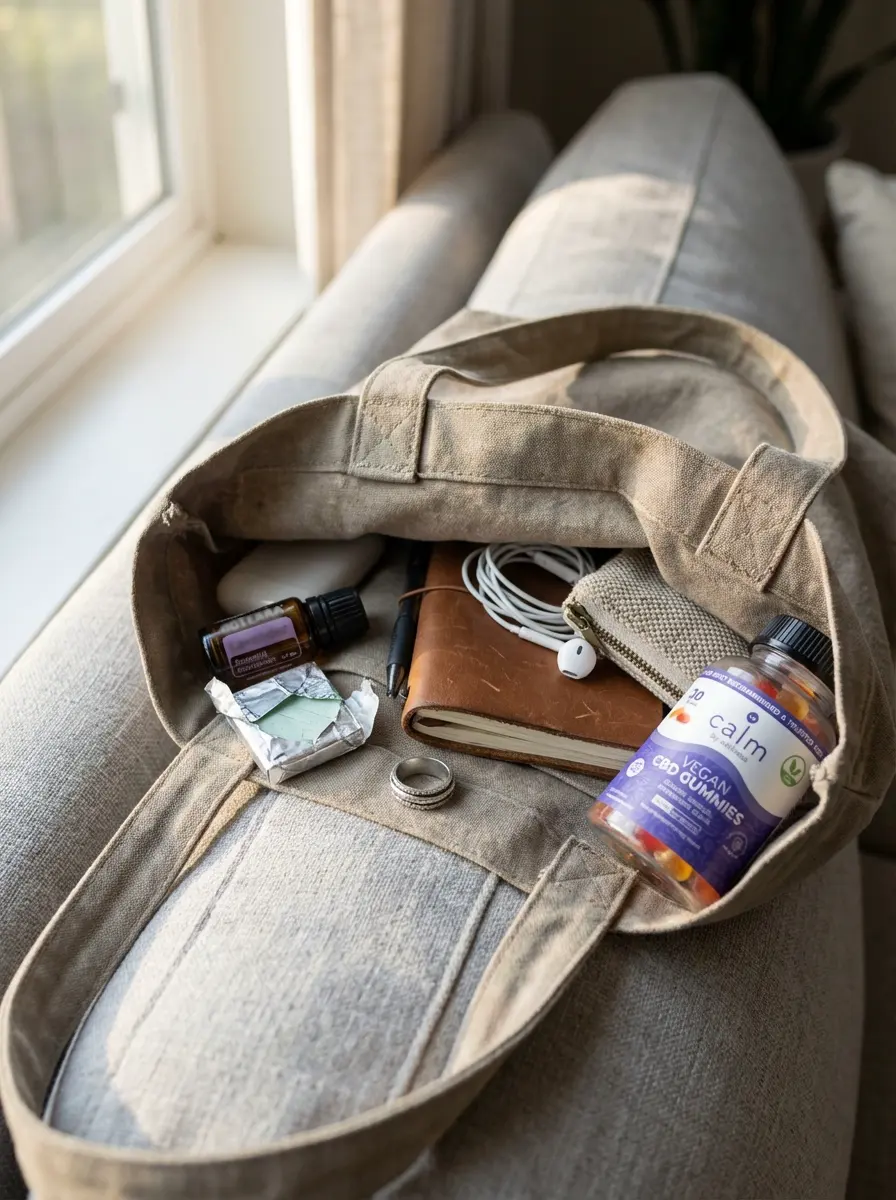
There is no perfect list of items. What works for one person may not work for another.
Start by thinking about what triggers stress. Then choose items that match that need.
Some common options include:
The goal is not to include everything. It is to choose a few items that feel reliable and easy to use in real moments.
Testing these in calm situations can help. It builds familiarity and makes each tool easier to reach for when stress shows up.
Keeping everything in one place also helps. When items are organized and easy to access, they feel more usable. That small sense of readiness can make a difference when things start to feel overwhelming.
Over time, many people refine their kit. They keep what works and remove what does not. This makes the bag simpler and more effective.
These kits are meant to support, not replace, long-term coping.
Over time, many people reduce the number of items they carry. Some keep just one or two essentials. Others learn to manage stress without the bag.
This process helps build confidence. It shows that coping skills can work even without tools.
The goal is not to depend on the bag forever. It is to use it as a step toward better control.
Anxiety bags are part of a larger shift. People are looking for simple ways to handle stress without overcomplicating things.
Small habits often work best because they are easy to repeat. Some people also build routines that support relaxation outside of stressful moments.
This can include simple daily practices or natural options that promote calm. The goal stays practical and easy to maintain.
Anxiety bags offer a simple and practical way to handle stress in the moment.
They work by using sensory tools to bring attention back to the present. This can reduce how intense stress feels and help people stay in control.
Experts support this approach for short-term relief. It works best alongside other coping strategies.
The idea is straightforward. Prepare ahead. Keep it simple. Use what works.