
How to Choose the Best CBD Product for Your Lifestyle?
Quick Summary It’s Not About the Strongest Product; It’s About the Right Fit The CBD market has grown rapidly over the past several years, giving
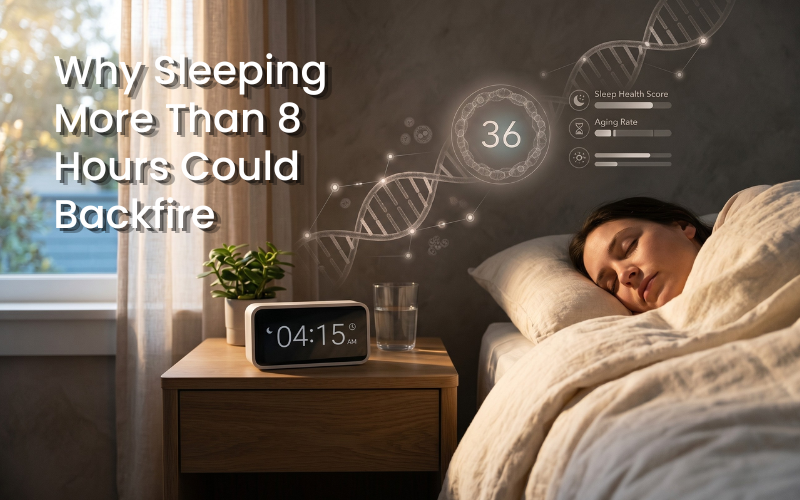
Most people know that skimping on sleep feels bad. But research is now showing that the connection between sleep and aging goes far deeper than most of us realize: irregular or extreme sleep patterns may actually speed up how fast your body ages at a cellular level.
A landmark study published in May 2026 examined biological aging across virtually every major organ system in the human body. The findings add meaningful weight to what researchers have long suspected: that sleep and aging are deeply intertwined, in ways that extend well beyond the brain.
To understand this study, it helps to know what “biological aging” actually means in this context. Researchers use tools called aging clocks, machine learning models trained on biological data such as proteins from blood tests to estimate how much faster or slower a person is aging compared to their actual calendar age.
Most aging clocks have historically measured aging across the whole body. But organs age at different rates, which is why the research team built aging clocks specific to individual organs.
Researchers used data collected from half a million participants in the UK Biobank. The team applied machine learning to structural data from medical images, organ-specific proteins, and molecules found in blood to create 23 aging clocks across 17 organ systems. This made it possible to ask not just “is sleep related to aging” but which organs are affected and in what ways.
The most striking finding from this research is the shape of the relationship itself.
Across the entire body, a coordinated U-shaped pattern emerged. Both short sleep, defined as fewer than 6 hours, and long sleep, defined as more than 8 hours, were associated with faster biological aging. The least amount of aging was observed in people who reported sleeping between 6.4 and 7.8 hours per night.
That range, roughly 6.5 to 8 hours, represents the window where the body appears to maintain the most biological balance. Going significantly below or above that window was consistently linked to accelerated aging markers across multiple organ systems.
The researchers were careful to note that this does not mean sleep duration alone causes organs to age faster or slower. Rather, both insufficient and excessive sleep may be markers of poorer overall health across the body. Still, the consistency of the pattern across so many different organs makes the connection hard to ignore.
One of the most important contributions of this research is showing just how broadly sleep and aging are linked throughout the body.
Short sleep was significantly associated with depressive episodes and anxiety disorders. It was also linked to obesity, type 2 diabetes, hypertension, ischemic heart disease, and heart arrhythmias. These are not minor or isolated conditions; they represent some of the most common chronic diseases people face as they get older.
Both short and long sleep were associated with chronic obstructive pulmonary disease, asthma, and a cluster of digestive disorders, including gastritis and gastroesophageal reflux disease.
Wen summarized the implications clearly. The broad pattern across the brain and body tells researchers that sleep duration is a deeply embedded part of overall physiology, with implications that reach far beyond any single system. This is not simply a sleep-and-brain story. It is a sleep-and-whole-body story.
The study also used its organ-specific aging clocks to look more closely at late-life depression, which offered a revealing comparison between short and long sleepers.
While the study could not definitively determine whether sleep duration caused late-life depression or whether late-life depression affected sleep duration, the researchers applied mediation analysis to examine the relationship. The findings suggest that short sleep may act more directly on the disease burden of late-life depression, while long sleep may influence late-life depression through biological pathways involving the brain and fat tissue clocks.
This distinction matters practically. It suggests that a person who consistently sleeps too little and a person who consistently oversleeps may both be at elevated risk for late-life depression, but for biologically different reasons. Future treatment approaches may need to account for which pattern a person follows rather than treating all sleep problems the same way.
The science points toward a fairly consistent target: aim for roughly 7 hours of quality sleep per night. That goal is easier stated than achieved, but it is worth taking seriously given what this research reveals.
A few habits have strong support for improving sleep consistency. Keeping a regular sleep and wake schedule, even on weekends, helps regulate the body’s internal clock. Reducing screen exposure in the hour before bed, limiting caffeine after early afternoon, and keeping the sleep environment cool and dark are all well-established starting points.
If you find that stress or a restless mind makes it hard to settle down at night, building a consistent wind-down routine can help. Some people find that a calming supplement routine, such as the CBD sleep support products, fits naturally into that kind of evening habit. The goal is not just to sleep longer; it is to sleep within that consistent, restorative window that supports healthy aging across your entire body.
This research offers a clear message: the relationship between sleep and aging reaches nearly every organ in the body, and both extremes — sleeping too little or too much — appear to accelerate the process. The ideal window of roughly 6.4 to 7.8 hours per night is consistent with general sleep health guidance, but what this study adds is the scale of what is at stake. This is not just about feeling rested. It is about how your heart, lungs, brain, immune system, and more hold up over time.
Taking sleep seriously is one of the most accessible changes most people can make to support long-term health. It does not require a prescription. It requires intention, consistency, and a willingness to treat rest as the biological priority it clearly is.
Both too little and too much sleep accelerate biological aging across nearly every organ. The sweet spot is between 6.4 and 7.8 hours per night.
Yes, according to this study. Sleeping more than 8 hours was associated with faster aging in the brain and fat tissue, likely reflecting underlying health issues.
Poor sleep — in either direction — was tied to accelerated aging in the heart, lungs, brain, and digestive system. No organ system was exempt.
Between 6.4 and 7.8 hours per night. That range consistently showed the least biological aging across all organ systems studied.
The research does not confirm it can reverse aging, but the findings strongly support consistent, adequate sleep as one of the most accessible long-term health habits you can build.
Quick Summary It’s Not About the Strongest Product; It’s About the Right Fit The CBD market has grown rapidly over the past several years, giving
Short answer: CBD can calm anxious feelings for some people, particularly at low-to-moderate doses, but it can also increase anxiety in others, especially if the
Quick Summary What Is Non-Sleep Deep Rest? Non-sleep deep rest, or NSDR, is a term coined by neuroscientist Andrew Huberman. It describes guided relaxation practices
Key Takeaways You have probably seen creatine in gym bags and protein shakes for years, but a growing number of researchers are now studying creatine
Quick Summary Learning how to sleep on a plane can turn a miserable red eye into genuine rest. Tight seats, cabin noise, dry air, and