How to Choose the Best CBD Product for Your Lifestyle?
Quick Summary It’s Not About the Strongest Product; It’s About the Right Fit The CBD market has grown rapidly over the past several years, giving
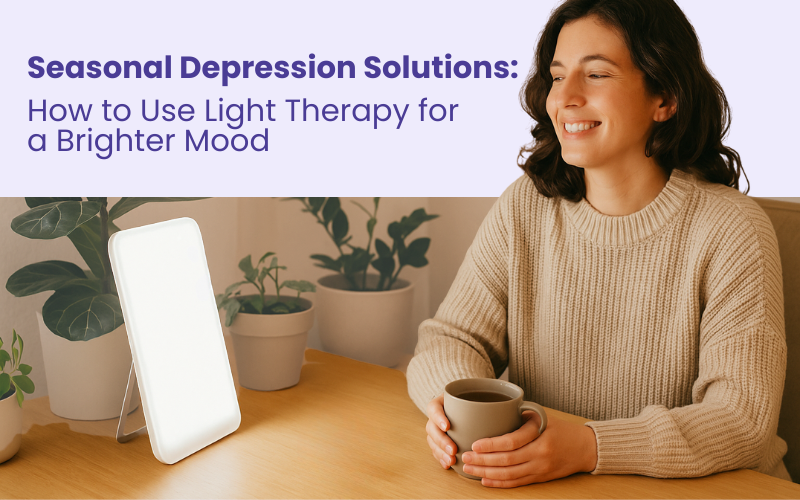
As the days grow shorter in the fall, many people notice that they’re sleeping more, craving carbs, and feeling low. These may be early signs of Seasonal Affective Disorder, or SAD.
About 1 in 20 adults experience SAD each year. Many more face a milder version, often referred to as the winter blues.
Symptoms include:
SAD symptoms usually begin in the fall or early winter and improve with spring’s return. Some common treatments include light therapy, medication, and counseling.
Light is a powerful signal to the brain. When daylight is limited, our internal clock (the circadian rhythm) can drift out of sync. This affects sleep, hormones, and mood.
SAD light therapy uses bright artificial light to stimulate the brain’s light-sensitive pathways. This helps reset the circadian rhythm and regulate serotonin and melatonin.
Light therapy is generally well-tolerated, with few side effects when used properly.
Not all light boxes are effective. To be therapeutic, your device should meet certain standards.
Your device should:
You can find guidance through various groups that review and recommend high-quality models.
Please note that most SAD light boxes are not covered by insurance and are not regulated by the FDA for this use.
Using a high-quality light box consistently is key to getting results.
SAD light therapy works best when paired with other mood-boosting habits. These additional strategies can help support your mental health.
Some people are curious about using CBD (cannabidiol) to support mood, especially during the darker months. Early studies and anecdotal reports suggest it may help with sleep or anxiety, which often accompany SAD.
However, use caution:
If you’re curious, choose a reputable, lab‑tested brand, many people turn to Calm by Wellness for broad‑spectrum, THC‑free CBD products formulated to promote relaxation and better sleep. Always talk to a healthcare provider before adding CBD to your routine, and view it as a supportive tool alongside evidence‑based treatments like SAD light therapy.
While SAD light therapy helps many people, you should seek professional help if:
A doctor or therapist can guide your care and recommend a personalized plan that may include therapy, medication, or other supports.
How soon will I feel better?
Some people notice improvement in a few days. Most see full benefits within 2 to 3 weeks.
Can I use SAD light therapy in summer?
Typically, it’s not needed in summer. Some people with year-round symptoms may use it longer under medical supervision.
What if I skip a day?
Missing a day won’t ruin your progress, but try to maintain a daily habit for the best results.
Will my insurance cover a light box?
Usually not. Most people pay out-of-pocket for their light therapy devices.
Can I use a regular lamp instead?
No. Household lamps don’t produce the intensity or spectrum needed. A therapeutic light box should emit 10,000 lux and filter UV.
Seasonal Affective Disorder can sneak up as the days get shorter, making fall and winter feel heavy. But starting SAD light therapy early in the season can help reset your internal clock, restore energy, and lift your mood.
Using a high-quality light box each morning, paired with routines that support mental health, can be a powerful way to stay balanced. For some people, adding a thoughtful CBD routine under medical guidance may provide extra support.
The key is to start early, stay consistent, and don’t wait until your mood sinks. With the right tools and habits, you can bring more light into your days, even when the sun is scarce.
Quick Summary It’s Not About the Strongest Product; It’s About the Right Fit The CBD market has grown rapidly over the past several years, giving
Short answer: CBD can calm anxious feelings for some people, particularly at low-to-moderate doses, but it can also increase anxiety in others, especially if the
Quick Summary What Is Non-Sleep Deep Rest? Non-sleep deep rest, or NSDR, is a term coined by neuroscientist Andrew Huberman. It describes guided relaxation practices
Key Takeaways You have probably seen creatine in gym bags and protein shakes for years, but a growing number of researchers are now studying creatine
Quick Summary Learning how to sleep on a plane can turn a miserable red eye into genuine rest. Tight seats, cabin noise, dry air, and