
How to Choose the Best CBD Product for Your Lifestyle?
Quick Summary It’s Not About the Strongest Product; It’s About the Right Fit The CBD market has grown rapidly over the past several years, giving
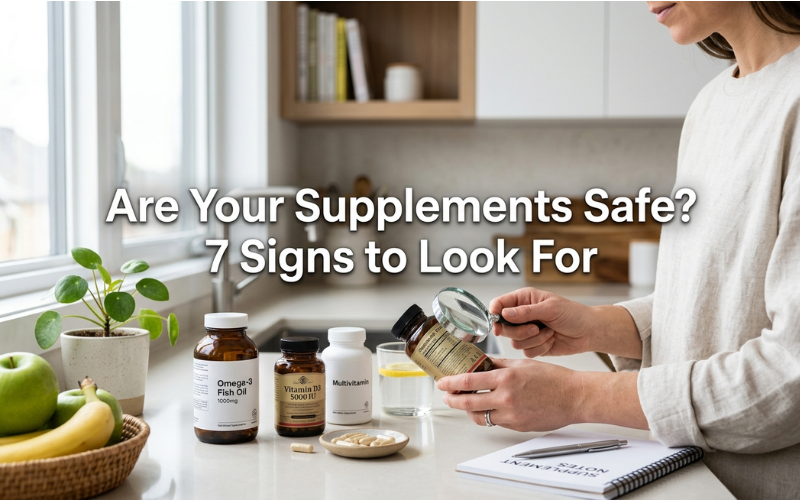
The supplement industry is large and widely accessible. Many people use supplements to support sleep, stress, immunity, and overall wellness.
At the same time, supplements are not regulated in the same way as prescription drugs. This means quality can vary between products. Some may contain different amounts than listed. Others may include unnecessary fillers.
Health experts explain that manufacturers are responsible for ensuring safety and labeling accuracy. This places more responsibility on the buyer to make informed choices.
Learning how to identify quality supplements helps reduce uncertainty. It also helps you choose products that align with your wellness goals.
Third-party testing is one of the clearest signs of quality.
Independent organizations test supplements to confirm they contain what the label claims. They also check for contaminants such as heavy metals or unwanted substances.
A verified seal shows that the product has been evaluated outside the brand itself. This adds a layer of trust that is hard to replace.
Some brands take this a step further by sharing Certificate of Analysis (COA), which shows detailed lab results for each batch. Customers can review product quality and consistency directly.
Certifications can signal that a supplement meets certain production standards.
These often relate to how the product is made rather than what it claims to do. Good Manufacturing Practices, often called GMP, help ensure consistency across batches.
Certifications may also reflect:
While certifications are helpful, they should not be the only factor. They work best when combined with clear labeling and testing.
A quality supplement should be easy to understand.
The label should clearly list:
Clear labeling supports safer supplement use. Missing details or vague wording can be a warning sign.
When labels are simple and complete, it becomes easier to compare products and make informed decisions.
Ingredients matter more than bold claims on the front of the bottle.
Quality supplements often use straightforward formulas. This makes it easier to understand what you are taking and why it is included.
Look for:
Complicated blends can make it harder to evaluate quality. Simpler formulas tend to be more transparent and easier to trust.
The amount of each ingredient plays a key role in overall quality.
A supplement may include a popular ingredient, but the dose may not align with what has been studied. In some cases, the amount may be too low to be meaningful. Understanding dosage helps reduce risk and supports better outcomes.
Looking at dosage helps you move beyond marketing and focus on what the product actually delivers.
Brand transparency is often a strong signal of product quality.
Trustworthy companies are open about:
When brands share this information clearly, it shows accountability.
Over time, companies that prioritize transparency tend to build stronger trust with their customers.
Claims that sound too good to be true often are.
Supplements are not designed to replace medical treatments. Products that promise extreme or instant results should be approached with caution.
Reliable supplements focus on support, not guarantees.
Paying attention to how a product is marketed can help you separate realistic options from exaggerated claims.
Choosing quality supplements does not need to feel overwhelming. A few simple checks can make a meaningful difference.
Start by looking for third-party testing and clear certifications. Read labels carefully and keep an eye on ingredient lists. Pay attention to dosage and choose brands that are open about their process.
Most importantly, stay mindful of how products are presented. Clear, honest information is often a better signal than bold promises.
When you focus on these signs, it becomes easier to find supplements that align with your routine and support your overall wellness in a steady, reliable way.
Quick Summary It’s Not About the Strongest Product; It’s About the Right Fit The CBD market has grown rapidly over the past several years, giving
Short answer: CBD can calm anxious feelings for some people, particularly at low-to-moderate doses, but it can also increase anxiety in others, especially if the
Quick Summary What Is Non-Sleep Deep Rest? Non-sleep deep rest, or NSDR, is a term coined by neuroscientist Andrew Huberman. It describes guided relaxation practices
Key Takeaways You have probably seen creatine in gym bags and protein shakes for years, but a growing number of researchers are now studying creatine
Quick Summary Learning how to sleep on a plane can turn a miserable red eye into genuine rest. Tight seats, cabin noise, dry air, and