
How to Choose the Best CBD Product for Your Lifestyle?
Quick Summary It’s Not About the Strongest Product; It’s About the Right Fit The CBD market has grown rapidly over the past several years, giving
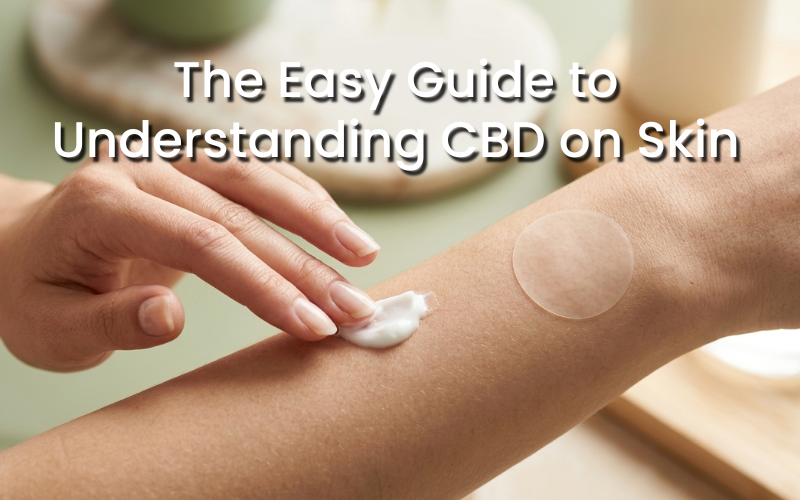
Many people use CBD creams, balms, and patches every day. Still, one question keeps coming up. How is CBD absorbed through the skin?
The answer depends on the product formulation. Some CBD products remain near the skin’s surface. Others are designed to move deeper and interact more broadly within the body.
Understanding the difference can help you choose the right product for your skincare routine, workout recovery, or everyday wellness habits.
CBD interacts with the body through the endocannabinoid system, often called the ECS. This system helps regulate balance across different functions in the body, including skin activity.
Cannabinoid receptors are found in several parts of the skin, including hair follicles and oil-producing glands. CBD does not directly bind to these receptors. Instead, it influences how they respond.
When CBD is applied topically, it mainly works within the area where it is placed. This localized activity explains why many people use CBD creams or balms on specific areas instead of taking CBD orally.
The skin itself contains several layers. The outer layer acts as a protective barrier against pollutants, bacteria, and environmental stressors. Because of this barrier, many skincare ingredients remain close to the surface.
The skin is designed to protect the body. That protection makes absorption more complicated.
The outermost layer of the skin controls what can pass through. This is why many topical products stay within the upper layers instead of entering the bloodstream.
CBD absorbed through the skin depends heavily on formulation. Standard topical products are designed for surface-level interaction. Transdermal products use specialized delivery systems intended to move deeper into the skin barrier.
This distinction matters because the intended outcome changes depending on the product type.
Some people want targeted skincare support. Others want broader systemic interaction. The formulation determines how the CBD behaves after application.
CBD topicals include creams, lotions, balms, serums, and moisturizers applied directly to the skin.
After application, CBD may move through pores and hair follicles into the upper layers of the skin. From there, it interacts with receptors found near sebaceous glands and surrounding skin structures.
Most topical CBD products are designed to stay localized. They usually do not enter the bloodstream.
This localized action is one reason CBD topicals have become popular in skincare and post-workout routines. Many people apply them after exercise to support skin comfort and manage tension in targeted areas.
Topical formulations often combine CBD with moisturizing ingredients like shea butter, aloe vera, coconut oil, or essential oils. These ingredients help support hydration and barrier function while improving texture and absorption.
For people building a simple recovery or skincare routine, products like CBD creams or balms can fit naturally alongside moisturizers, stretching, hydration, and nighttime self-care habits.
Transdermal CBD products work differently from traditional topicals.
These formulations are designed to pass through the skin barrier and move into deeper tissues. In some cases, the CBD may enter the bloodstream and interact with receptors throughout the body.
Transdermal products commonly appear as patches or specialized creams.
The biggest difference between topical and transdermal CBD is the intended depth of absorption. Standard creams and lotions mainly support localized effects. Transdermal systems aim for broader systemic interaction.
This is why product labels and formulation details matter when comparing CBD products.
Research into skin delivery systems continues to grow as interest in cannabinoid-based skincare and wellness products increases. Organizations focused on skin science and dermatology continue studying how ingredients interact with the skin barrier and inflammatory response.
CBD skincare products are becoming more common because of how CBD interacts with receptors already present in the skin.
CBD is also being studied for properties connected to skin comfort and environmental stress support. These findings help explain why CBD now appears in facial serums, moisturizers, body lotions, and recovery creams.
Many formulations focus on:
Some products combine CBD with ingredients like colloidal oatmeal, aloe vera, shea butter, and hemp seed oil to support moisture and comfort.
For people with dry or stressed skin, combining CBD skincare with simple habits like hydration, gentle cleansing, and nighttime moisturizing can create a more balanced routine.
CBD topicals do not work the same way.
Some creams are designed for daily hydration. Others focus on targeted application after physical activity. Transdermal patches are built for extended wear and deeper absorption.
When shopping for CBD skincare products, look for:
Patch testing is also important, especially for sensitive skin. Applying a small amount to the inner arm before full use may help identify irritation from carrier ingredients or fragrances.
People often choose fragrance-free products or botanical-based formulas depending on skin sensitivity and routine preferences.
CBD topicals work best when they fit naturally into an existing wellness routine rather than replacing healthy skincare habits altogether.
CBD absorbed through the skin depends on the product formulation and intended use.
Most topical CBD products remain within the upper layers of the skin, where they interact locally with cannabinoid receptors. Transdermal products are specifically designed to penetrate deeper and may allow CBD to move into the bloodstream.
Understanding this difference makes it easier to choose products that match your goals, whether that means skincare support, targeted comfort, or broader systemic interaction.
As CBD skincare continues to grow, topical products remain one of the most approachable ways to incorporate CBD into a daily wellness routine.
CBD absorbed through the skin works by interacting with receptors located within the skin layers. Standard topicals usually stay near the surface, while transdermal products are designed for deeper penetration.
Most topical CBD products do not enter the bloodstream. Transdermal CBD products are specifically formulated to move deeper and may reach systemic circulation.
Topical CBD supports localized interaction within the skin. Transdermal CBD is designed to pass through the skin barrier and interact more broadly within the body.
Many CBD skincare products are designed for daily use. Creams, lotions, and serums are often incorporated into regular skincare routines.
Look for transparent ingredient lists, third-party testing, and formulations that align with your skincare or recovery needs.
Quick Summary It’s Not About the Strongest Product; It’s About the Right Fit The CBD market has grown rapidly over the past several years, giving
Short answer: CBD can calm anxious feelings for some people, particularly at low-to-moderate doses, but it can also increase anxiety in others, especially if the
Quick Summary What Is Non-Sleep Deep Rest? Non-sleep deep rest, or NSDR, is a term coined by neuroscientist Andrew Huberman. It describes guided relaxation practices
Key Takeaways You have probably seen creatine in gym bags and protein shakes for years, but a growing number of researchers are now studying creatine
Quick Summary Learning how to sleep on a plane can turn a miserable red eye into genuine rest. Tight seats, cabin noise, dry air, and